Brian Sims
Editor
Brian Sims
Editor

FIFTEEN YEARS ago this week, a Gate Safety Summit was hosted in London at the Institute of Directors, designed to tackle the serious issue of automated gate and barrier safety following the deaths of two young children in separate gate-related accidents.
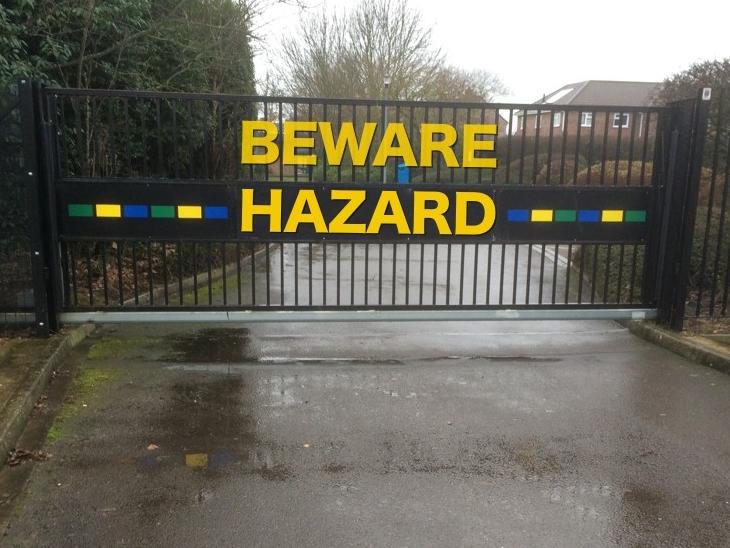
That meeting signalled an industry first, bringing together representatives from a broad cross-section of companies and generic trade and safety organisations, all of whom had a role to play in calling for the introduction of tighter guidelines and legislation pertaining to automated gate safety.
Improvements realised
Fifteen years on, then, what has changed? Gate Safe, the charity behind the inaugural gathering, has outlined the various improvements that have been made along the way. They are as follows:
*awareness of the importance of automated gate safety among installers and other associated professionals has shifted from minimal to becoming mainstream
*the fitting of photocells on barriers was previously unheard of, but now those photocells are an accepted element of the safety protocol
*British Standards were very much viewed as the definitive framework to ensure a safe and compliant automated gate or barrier, but now the Gate Safe recommendation for a risk assessment approach (which considers the specific key factors for an individual gate) is acknowledged
*safety edges, once not always fitted to a gate/barrier and regularly not fitted on both sides of the gate, now feature more heavily on the majority of new installations
*in the wake of so many falling gate accidents, Gate Safe’s continued recommendation for either a third hinge and/or a fall arrest system (ie a gate tether) to mitigate the risk of a falling gate continues to gather support
*in the unfortunate event of an automated gate or barrier incident, Gate Safe is now regularly called upon by both the Health and Safety Executive and Trading Standards as an ‘Expert Witness’, duly providing independent technical input to help understand what went wrong, why and what steps should have been taken to prevent the accident from occurring
*there are now circa 4,000 installers listed on the Gate Safe register representing 1,500 organisations, all of whom have taken the IOSH-approved Gate Safe training course
*the training, which was originally launched as face-to-face only, now includes an online offering, duly resulting in training running every single week
*Gate Safe remains the ‘go-to’ source for independent, impartial and unbiased surveys on an existing automated gate or barrier installation
*gate owners can now access a Gate Safe MOT providing a clear visual reference for gate users that a gate has been installed/maintained in line with accepted Best Practice
No time for complacency
Commenting on the charity’s journey to date, Gate Safe founder Richard Jackson OBE said: “While it’s incredibly fulfilling to look back on the progress that has been made, this isn’t a time for complacency as there’s still much more that can be done to improve the safety of automated gates.”
Jackson continued: “As long as the profession remains unregulated, there will always be those ‘accidental installers’ operating in the field who remain ignorant, or perhaps just oblivious, to the steps that need to be taken in order to deliver a safe and compliant installation. Similarly, the sale of automated gate kits to the general public enables a complete amateur to transform a manual gate into a dangerous machine.”
In conclusion, Jackson noted: “Gate Safe remains committed to its original founding objective: to put a stop to any further accidents occurring because of an unsafe gate or barrier. We will continue to lobby the relevant bodies in a determined bid to instigate further change.”
*Further information is available online at www.gate-safe-org