Brian Sims
Editor
Brian Sims
Editor

IN THE wake of circa 18 years’ worth of planning and development time, the iconic Zayed National Museum – the new national museum of the United Arab Emirates (UAE) – opened its doors to the public on 3 December last year. The physical security requirement at this prestigious site has been skilfully addressed by Charter Global.
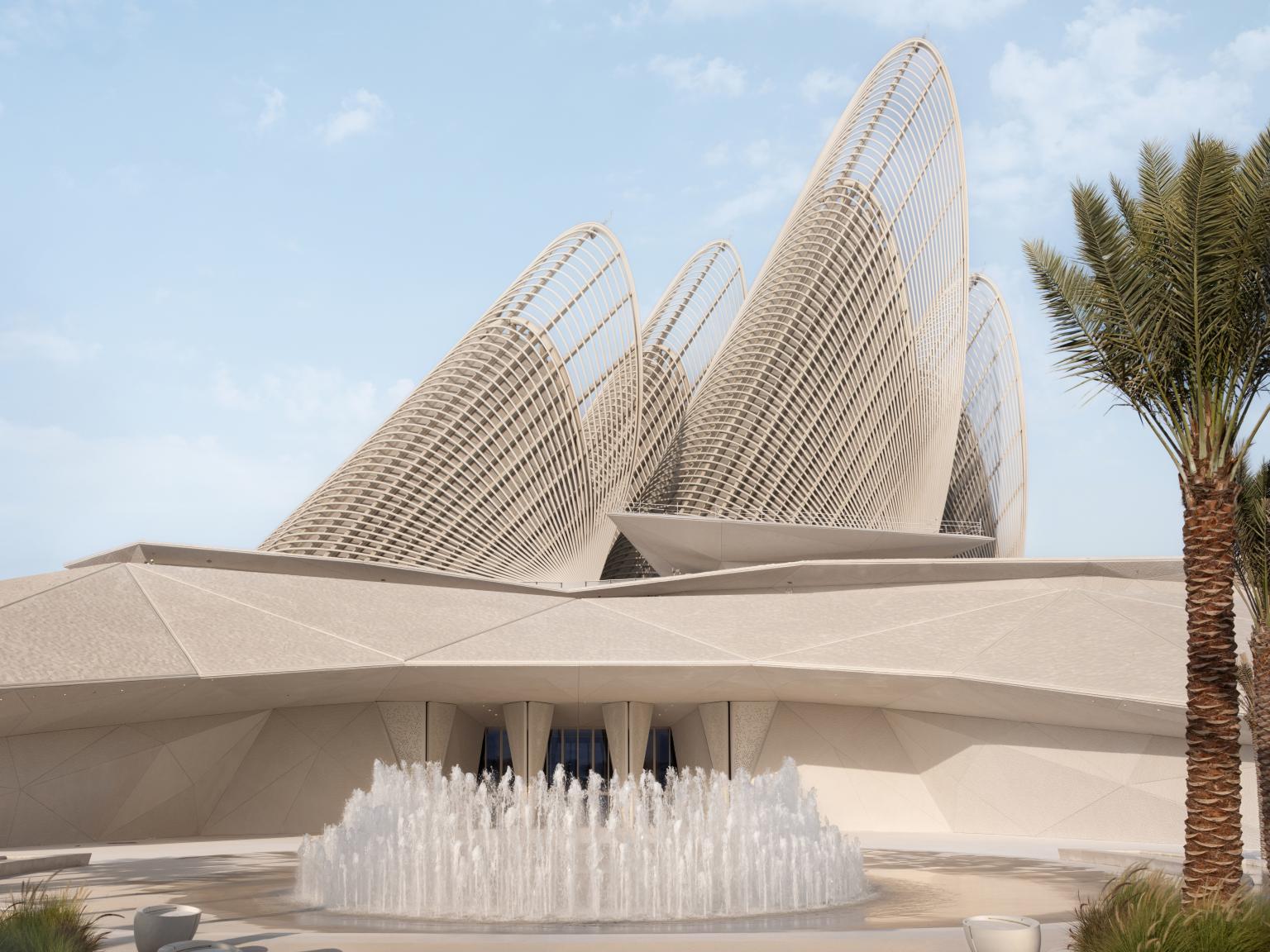
The Zayed National Museum honours the UAE’s founding father, namely the late Sheikh Zayed bin Sultan Al Nahyan and takes the visitor through a journey charting the history of the Emirates: from ancient times all the way through those civilisations that have helped to shape the culture and identity of the land to this present day.
Interestingly, the building’s architecture addresses the challenge of sustaining life in a desert environment, with five lightweight steel wings forming part of a system of natural ventilation within the museum. Air vents at the top of the wings draw hot air out of the atrium areas. Air that has been naturally cooled through pipes buried deep in the desert floor is drawn up into the atrium’s ventilation system.
Sheikh Zayed’s love of nature is reflected in those five steel wings that are glazed to channel natural light into the galleries below and shaped to represent the wings of a falcon (a national symbol of power and victory in the UAE).
Ultimately, the building stands as a spectacular feat of architecture and technology both from an internal and external perspective.
Architectural forms
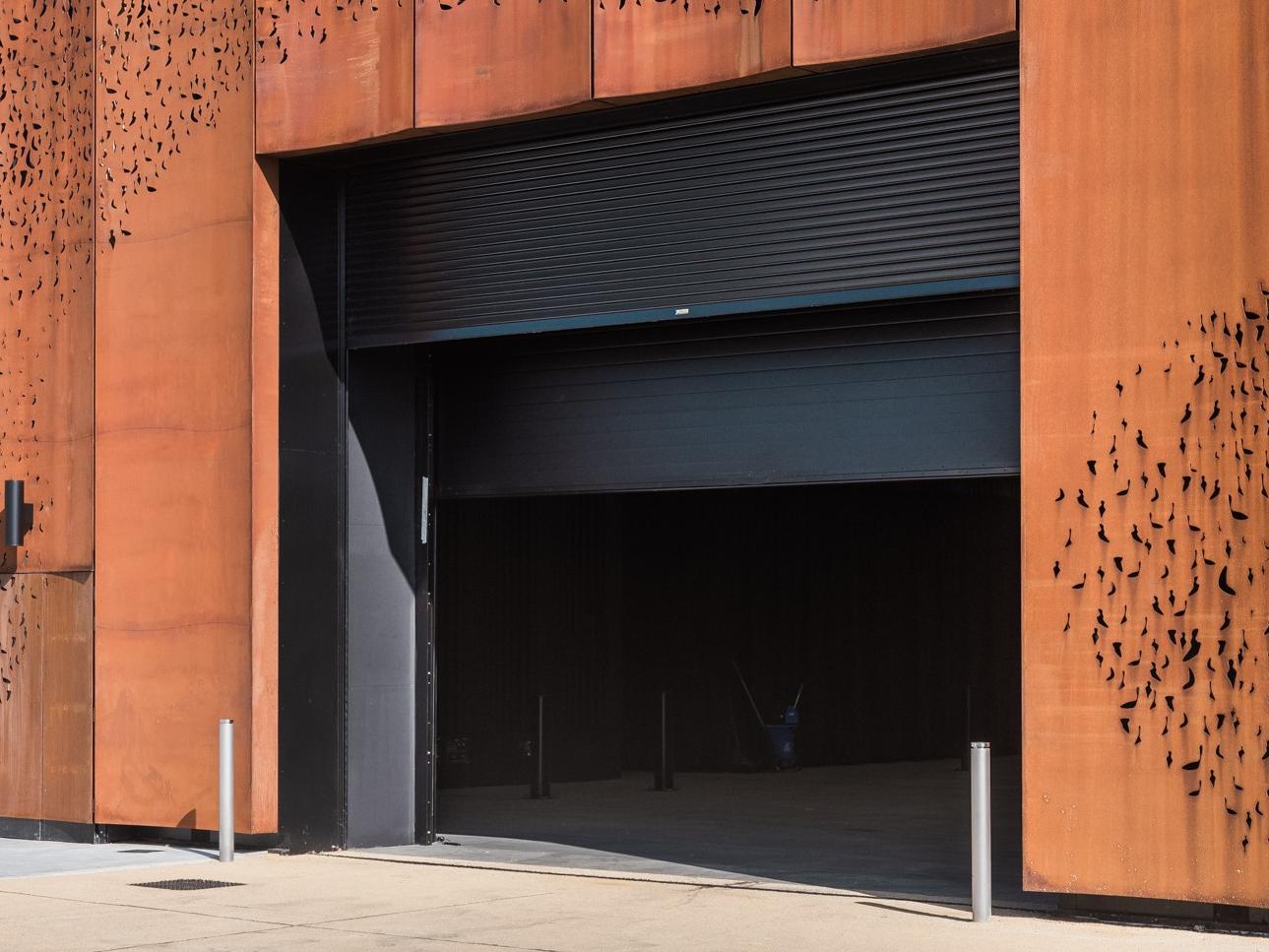
In tandem with seeking precise and reliable functionality for all aspects of the build programme, a specification was issued for security-rated shutters to protect both Back-of-House areas and a number of internal exhibition/storage spaces. Not all of these security shutters could be a straightforward internal face fix: some required an external face fix solution in order to meet the demands realised by the exceptional architectural forms.
With aesthetic form as well as function being essential to this project, a high-security external face fix solution was required. That being the case, Charter Global was approached by a specialist contractor in Dubai and the popular Obexion D10 (SR4) shutters were proposed for installation.
The Obexion MDD-10 is one of the few specialist shutters that can be externally face fixed, as well as holding the independently certified LPS 1175 Issue 8 D10 (SR4) security rating.
When installing security shutters, many specify an internal face fix. This places the ‘attack side’ of a given shutter behind the building envelope, meaning that there are no visible profiles, fixings or accessible components. As a direct result, the shutter is less vulnerable to tampering or attempts at forced entry.
Externally fitted shutters are typically more exposed and, as such, more vulnerable to attack. However, many of the Obexion ranges of shutters have both internal and external fixing options.
Crucially, they’re designed to deliver the same level of security regardless of installation type. This is achieved through a patented design initiated by Charter Global that prevents tampering with external profiles and fixings.
Security ratings
The Obexion MDD range covers security ratings from LPS 1175 Issue 8 D5 to D20 and is typically used in high-risk commercial, Government, defence, Criticial National Infrastructure and laboratory applications.
In this particular installation, the functional features were of the utmost importance, but the Obexion also meets the aesthetic requirements thanks to styling that’s sympathetic when it comes to leading-edge architecture.
Given the company’s network of international clients, Charter Global is well versed in transporting its products around the globe. The shutters for this project were transported in treated wooden cases to ensure they arrived in their best condition and survived any rapid temperature fluctuations during transit.
*Further information is available online at www.charter-global.com
**Additional detail concerning the Zayed National Museum project can be accessed at https://charter-global.com/case-studies/securing-iconic-architecture-in-a-demanding-environment/