Brian Sims
Editor
Brian Sims
Editor

THE MOST extensive set of reforms to policing since forces were professionalised two centuries ago have been announced by Home Secretary Shabana Mahmood. In a White Paper entitled ‘From Local to National: A New Model for Policing’, the Government has outlined what it terms a “radical blueprint” for reform.
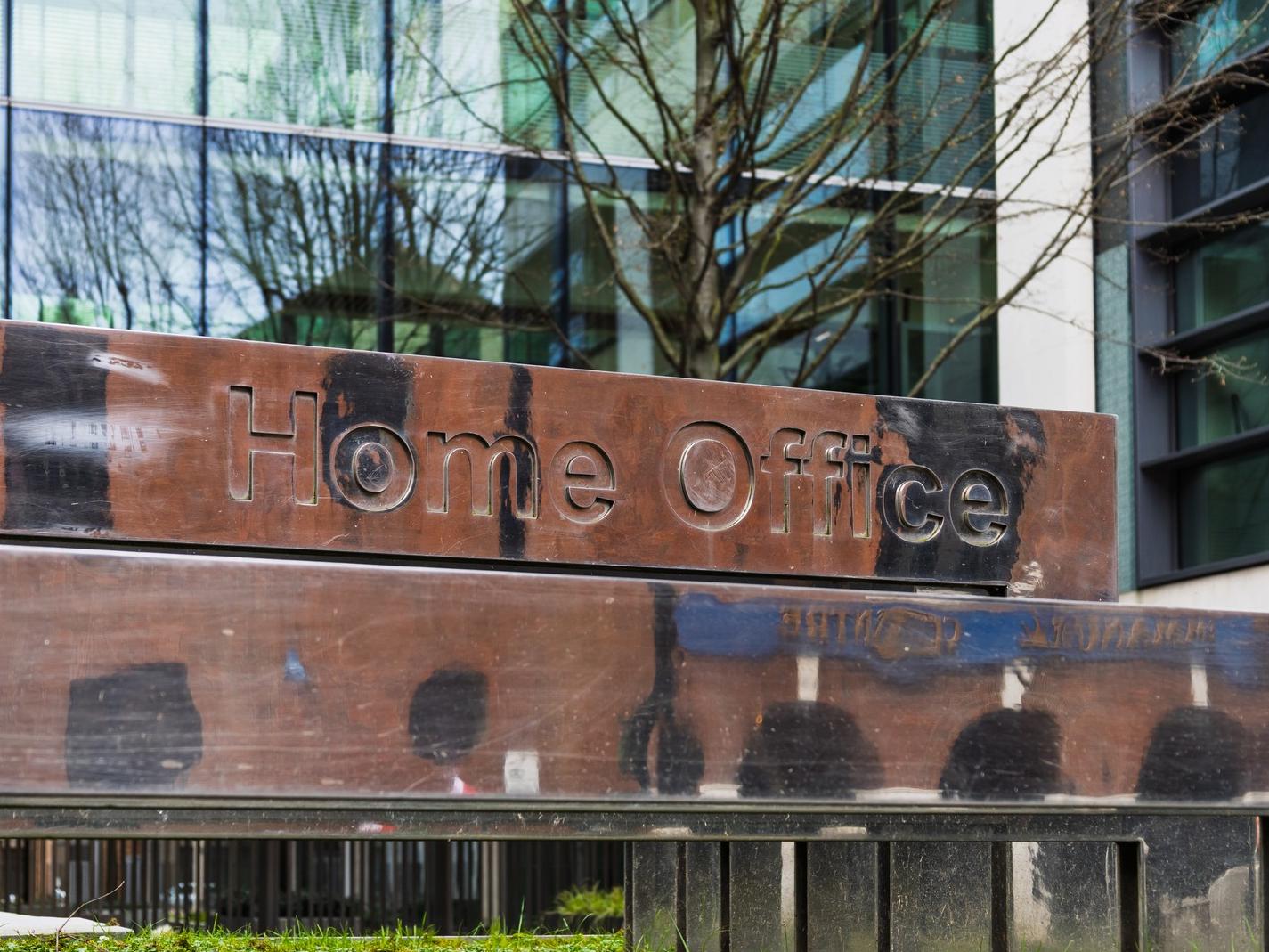
The Government will launch a review into dramatically reducing the number of police forces in England and Wales. Consolidating the current model would “make the police more cost-efficient” and afford the taxpayer greater value for money, while also ensuring a less fragmented system that will better serve the general public.
According to the Government: “This is a moment to reset policing’s focus and return to its core principles: restoring neighbourhood policing and tackling local crime by delivering a structural overhaul to meet the demands of the modern world.”
National Police Service
The proposals include the establishment of a new nationwide police force designed to fight the most complex and serious forms of criminality. The new National Police Service “will attract world-class talent” and use state-of-the-art technology to fight complex and serious crimes, lifting the burden on overstretched local forces and allowing the latter to focus attentions on catching local criminals.
The National Police Service will bring the capabilities of the National Crime Agency, Counter Terrorism Policing, regional organised crime units, police helicopters and national roads policing under a single organisation.
As one force, it will be better equipped to share technology, intelligence and resources to stop the growing threat from crime that has become increasingly complex, digital, online and which shows no respect for constabulary borders.
Further, a national police commissioner will be appointed to lead the force and serve as the most senior police officer in the country.
The Government suggests that these plans will enable local officers to spend more time supporting victims of crime and delivering neighbourhood policing rather than navigating the forensics system. This will give victims confidence as their case will be supported by world‑class specialist expertise, so too the latest technology, no matter where they live.
Responsibility for forensics
Part of the new National Police Service’s remit will be to take on responsibility for forensics from the 43 orces with direction set centrally from the new organisation. Demand for specialist digital forensics means there are 20,000 devices awaiting analysis at any time. The National Police Service will deal with these backlogs and help the police in general to keep up with the ever-increasing pace of change in technology.
Front line policing will save circa £350 million by scrapping outdated procurement approaches, which will instead be used to fight crime. Under the current localised model, each of the 43 forces often procure technology, equipment and clothing themselves, meaning 43 different teams undertaking the same work. The new National Police Service will end this inefficiency, taking on the responsibility for shared services, equipment and IT.
In practice, the National Police Service will buy equipment once on behalf of all, saving money through economies of scale and reinvesting the savings back into front line policing.
Accountability and standards
Government ministers will be handed new powers to intervene directly when it comes to failing forces, sending in specialist teams to turn them around such that they fight crime more effectively. If crime solving rates or police response times are poor, the Home Secretary will be able to send in experts from the best performing forces with a view towards improving their performance.
In addition, the Home Secretary will restore the power to sack failing chief constables. New laws will hand ministers statutory powers to force the retirement, resignation or suspension of chief constables if they are found to be poorly performing.
The forces will also be directly accountable to the public, with new targets on 999 response times, victim satisfaction, public trust and confidence. These results will be published and forces graded so that communities can make comparisons.
In order to further reinforce accountability, His Majesty’s Inspectorate of Constabulary and Fire and Rescue Services will gain statutory powers to issue directions when forces fail to act on its recommendations.
Alongside these force-wide measures, the Government will also ensure the highest standards from individual officers. To strengthen safeguards and ensure those unfit for policing are kept out of the profession, the Government will introduce laws to impose robust and mandatory vetting standards for all police forces, thereby ensuring the public is protected.
Police officers will be required to hold and renew a licence throughout their career so they learn new skills as criminal techniques evolve. The Licence to Practise will ensure officers are best equipped with the problem solving and technological skills they need to catch more criminals.
Drawn from other professions such as the law and medicine, officers will have to demonstrate that they harbour the skills needed to fight crime. Those who fail to reach the required standard, following on from opportunities to try again, will be removed from the profession.
Neighbourhood policing
Under new reforms, response officers will be expected to reach the scene of the most serious incidents within 15 minutes in cities and 20 minutes in rural areas, while forces will be expected to answer 999 phone calls within ten seconds.
These new targets will ensure that all forces provide the same level of police response to crimes.
Currently, data on response times is collected differently across forces and police services are not held accountable if targets are not met. Reforming the system will create more transparency and consistency across the country.
Where forces fail to deliver, the Home Secretary will send in experts from the best performing forces to improve their performance, including when unmet response time targets are part of broader systemic failing.
To fight everyday crime, the Government will ramp up its pledge to restore visible neighbourhood policing and patrols in communities through an extension of its Neighbourhood Policing Guarantee. This has already placed named and contactable officers in each neighbourhood. Under the extension, every council ward in England and Wales will have its own named and contactable officers, in turn creating more local points of contact and affording officers a deeper understanding of the specific issues in their area.
Police forces will also recruit the brightest and best from universities in a new recruitment drive designed to cut crime and catch more criminals.
Modelled on Teach First, the Government is investing up to £7 million to attract top students from universities into specially trained graduate neighbourhood police officer roles in England and Wales.
For their part, retailers across the country will see a major crackdown on organised crime gangs thanks to £7 million of new Government investment aimed at dismantling criminal networks from the ground up. This funding will ‘supercharge’ intelligence-led policing to identify offenders, disrupt the tactics used to target shops and bring more criminals to justice.
State-of-the-art technology
The Government is making the largest investment into state-of-the-art police technology in history, with over £140 million to be invested in order to roll-out technologies to catch more criminals and keep communities safe.
The number of live facial recognition vans will increase five-fold, with 50 vans available to every police force in England and Wales.
The Government will also roll-out new Artificial Intelligence (AI) tools which will help forces to identify suspects from CCTV, doorbell and mobile phone footage that has been submitted as evidence by members of the public.
A new national centre on AI – Police.AI – will be set up to roll-out AI to all forces to free officers from paperwork, delivering up to six million hours for the front line every year (the equivalent of 3,000 police officers). This means more police on the streets fighting crime and catching criminals.
More tech specialists will work in police forces to outsmart modern criminals and put more fraudsters and organised crime bosses behind bars.
The move will enable police forces to uncover more vital hidden evidence on phones and laptops to secure more convictions of professional criminals.
Public order
A new senior policing role will be introduced to lead the police’s nationwide response to public disorder and galvanise and co-ordinate responses to major incidents.
The senior national co-ordinator role for public order policing will sit within the new National Police Service. The nominated individual will not be responsible for local public order responses, which remain within the remit of chief constables, and instead sit at a higher strategic level of oversight with responsibility for decision-making over the most significant national public disorder, such as the widespread disorder seen in the summer of 2024 and the riots that started in London back in 2011.
While local policing responses will remain the responsibility of chief constables, the new role will provide national oversight and decision-making on mobilisation and resourcing, with enhanced powers to:
*direct resources under mutual aid arrangements and require forces to contribute during major disorder
*ensure mandatory data sharing between forces
*set a national strategy for public order policing
*monitor and implement relevant recommendations from His Majesty’s Inspectorate of Constabulary and Fire and Rescue Services
Officer well-being
The Government will expand the roll-out of the dedicated Mental Health Crisis Line so that all officers and staff members can access mental health support. Officers and staff in front-facing and high-risk roles will also be offered psychological risk screenings each year so that officers who are suffering can be signposted to the best support when they need it the most.
Trauma tracker software will be made available to every force and ensure senior leaders can identify and support staff at the highest risk and intervene at an earlier stage. Mandatory training around resilience and mental health for new recruits and supervisors will be introduced and, importantly, treated as protected learning time.
Special constables
Experts in cyber security and technology are being encouraged to join the Special Constabulary as police forces across England and Wales ramp up their efforts to tackle modern crime.
Since 2012, the number of special constables in England and Wales has fallen year-on-year to just 5,534 as of March 2025. This is down 73% from 20,343 in 2012.
To reverse this decline, the Home Office will work with policing to streamline the recruitment process for Special Constables, making it easier for people to volunteer, while maintaining consistent high standards of vetting and training. Steps will also be taken to ensure that existing Special Constables are incentivised to remain in the role by better integrating them into the wider police force.
Western Business Media Limited
Dorset House
64 High Street
East Grinstead
RH19 3DE
UNITED KINGDOM