Brian Sims
Editor
Brian Sims
Editor

SIR MARK Rowley (Commissioner of the Metropolitan Police Service) has warned that British policing risks falling behind modern crime unless it undergoes the most significant reforms it has experienced in upwards of 50 years.
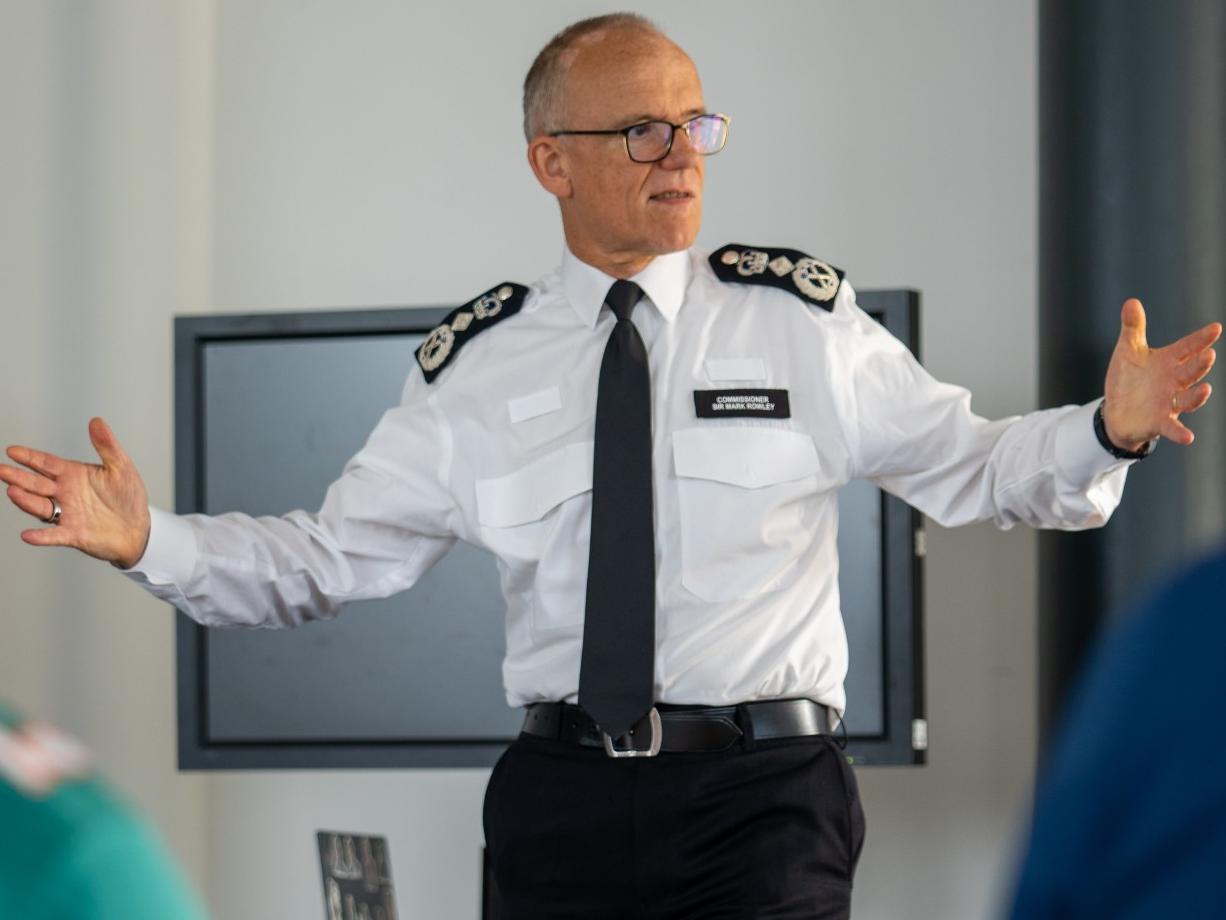
In a major speech in Manchester, the Commissioner argued that the current 43-force model is increasingly unable to cope with the scale, complexity and sophistication of modern criminality and that reform can no longer be delayed.
Despite the extraordinary people present in policing who run towards danger when others run away, who protect children from exploitation, disrupt terrorist networks, tackle retail thieves, take on organised crime and stand alongside victims in their darkest moments, the Commissioner observed that policing cannot continue to rely on the professionalism and goodwill of its workforce in order to compensate for a system that’s increasingly out of step with the realities of the crimes being tackled.
The reality of the situation is that positive outcomes nationally are now less than half of what they were 12 years ago and public confidence has fallen by 9%. This shows that communities are right to be worried about the current service policing provides to communities.
Straight choice
“I believe this is a choice between the third greatest revolution in British policing or the inevitable decline and fewer bobbies on the beat,” explained Rowley.
Victims and communities are increasingly being targeted by criminals from across the globe with a policing response designed for local threats. Organised crime groups, fraud networks, cyber criminals and hostile states operate across regional, national and international borders, while policing remains organised around structures designed for a different age.
The Commissioner feels that England and Wales should move towards eight-to-ten regional police forces, supported by hundreds of local policing commands and a new National Police Service in what would be the biggest reform of policing since the 1960s.
“The moments that define policing are the moments when it has the courage to change,” noted the Commissioner.
Three-tier structure
Moving from today's fragmented, bureaucratic and top heavy ‘spaghetti’ model to a simpler three-tier structure of local policing teams, capable regional forces and a National Police Service would remove duplication that currently exists 43 times over, freeing-up thousands of roles and enabling the police service to reinvest those resources in the front line solutions the public wants to see.
Drawing comparisons with the National Health Service, the Commissioner stated that Britain would never expect dozens of separate hospital services to independently provide every specialist capability and that public safety should be organised in the same way. Every community deserves access to the same specialist expertise and resources, regardless of where a community is based.
The Commissioner underlined how policing must remain accountable to communities. This is something policing has never questioned. He also delivered a stark warning on the financial pressures facing policing. The spend on policing has fallen from around 0.9% of GDP to around 0.7% since 2010.
Problem of underinvestment
Years of underinvestment have left forces spending too much money on maintaining ageing systems, while in parallel criminals exploit rapidly advancing technology. Officers are increasingly being diverted from neighbourhood policing to manage growing demand created by pressures elsewhere in society, particularly so in mental health and social care.
“Policing has tried to keep up and made do as best it can to patch over our broken model,” the Commissioner stated, “but the model is creaking. We have 43 overstretched forces trying to do too much with too little.”
The Commissioner said that the public see the consequences of this every day through reduced officer visibility, stretched services and many victims waiting too long for justice.
Mounting pressure
Sir Mark Rowley’s intervention comes against a backdrop of mounting pressure across the wider criminal justice system. Ahead of policing’s 200th Anniversary in 2029, the choice is now between reform and decline.
In one of his strongest interventions yet on the future of policing, Sir Mark said to fellow chiefs, politicians and policymakers alike that criminals have modernised faster than the institutions designed to stop them.
Criminals have adapted, organised crime has adapted, technology has adapted and hostile states have changed, while the fundamental structures of British policing have remained largely stagnant.
Sir Mark is of the opinion that the greatest risk facing policing is not reform itself, but instead failing to reform while the threats confronting members of the public continue to evolve and grow. “The real danger is not change,” concluded the Commissioner. “The real danger is standing still.”
Western Business Media Limited
Dorset House
64 High Street
East Grinstead
RH19 3DE
UNITED KINGDOM