Brian Sims
Editor
Brian Sims
Editor

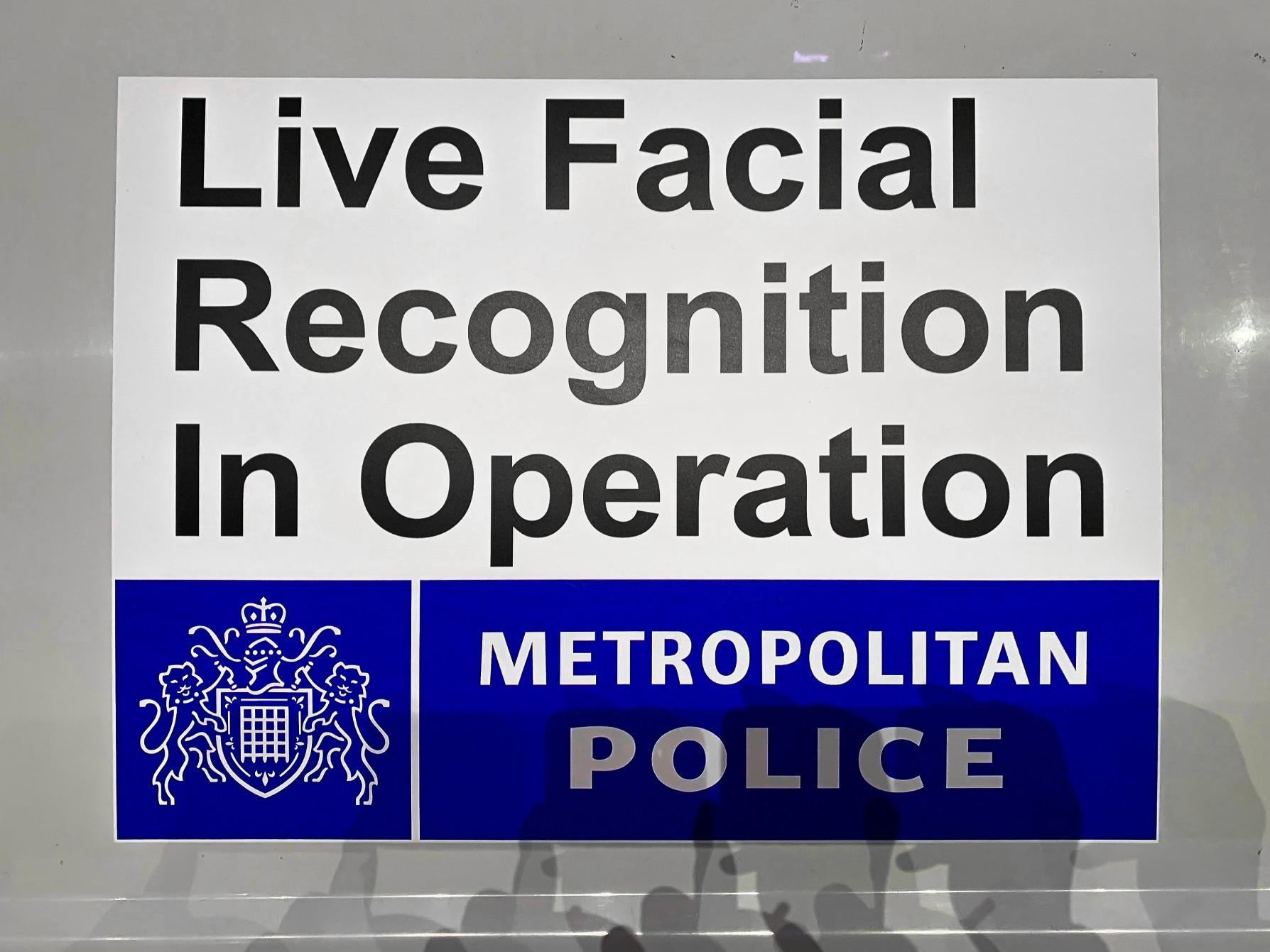
METROPOLITAN POLICE Service Commissioner Sir Mark Rowley has set out an ambitious next phase in the use of technology to tackle crime in the capital by highlighting the planned roll-out of static live facial recognition (LFR) cameras, a major roll-out of drone operations across London and an increased use of Artificial Intelligence (AI) in order to analyse video evidence in criminal investigations.
The announcements were delivered in a landmark speech which set out how technology and data exploitation could enable policing to make a transformative leap. The Commissioner has warned that, without tackling the barriers to progress, “we will be outpaced by criminals”.
In October last year, the Met launched a pilot that saw drones deployed in real-time to incidents in Islington, providing live information and intelligence, tracking suspects and helping officers to make faster and safer decisions.
Eight months later, the Met now operates three drone sites across London, with nine drones deploying to around 200 incidents every week. Response times now average below two minutes, with drones increasingly the first resource on scene.
Rowley asserted that the Met cannot stand still. The ambition is that, by this time next year, the Met will have drone coverage in every London Borough. Alongside this, the Met will work with the blue light services to build a city-wide Emergency Services drone network.
Turning point
Commissioner Sir Mark Rowley explained: “This is a turning point for policing in London. We are setting out how we will significantly step up our use of technology to fundamentally change how we protect the public.”
Rowley continued: “Drones are already transforming how we respond to incidents, delivering visuals from the scene in minutes, giving officers critical intelligence and helping us to act faster and more safely. Now, we’re going to scale that capability across London and work with partners to create a truly integrated and city-wide drone network.”
Further, Rowley noted: “We’re rolling out live facial recognition with static cameras in areas like the West End, building on the success we’ve already seen in Croydon where the technology is driving arrests and cutting crime. We’re also using AI-powered video analytics to unlock the vast amounts of surveillance footage captured across London, in turn helping our investigators to find evidence faster and act earlier.”
Rowley went on to comment: “This is about more than individual tools. Criminals are already using technology to become more organised, more connected and harder to catch. Right now, policing is trying to keep up by using systems that are too slow and too restrictive. If that situation doesn’t change, we will not succeed.”
Public in support
Recent polling suggests that 87% of Londoners support the use of drones to respond to 999 calls to capture live evidence or information from a crime scene. The polling also shows that 81% of Londoners support the police when it comes to the adoption of new technology.
The new network will include co-ordinated airspace management, shared launch sites, connectivity and control systems, allowing blue light services across London to respond more quickly and operate more efficiently and collaboratively, while in parallel saving the Emergency Services time on incidents that don’t require multiple physical responses.
The Commissioner has confirmed a major roll-out of LFR, which remains a key tool in identifying and apprehending offenders. Since the start of 2024, LFR has helped officers to locate and arrest more than 2,000 dangerous offenders, including individuals wanted for serious crimes. Public confidence remains strong, with around 80% of Londoners supporting its use.
Last year, static LFR cameras were trialled in Croydon, resulting in hundreds of arrests and a 10.5% reduction in crime including retail offences and instances of anti-social behaviour.
Rowley has highlighted the growing role of AI in analysing video evidence. With around one million surveillance cameras operational across London, investigators are faced with an unprecedented volume of footage. The Met is now using AI to significantly accelerate this process. The technology can scan and interpret footage to identify people, vehicles and key events, turning video into actionable evidence and intelligence. This enables investigators to move more quickly, identify lines of enquiry and reduce the risk of missed evidence.
Early use in serious crime investigations has already delivered results. Analysis across 23 major cases, including homicide investigations, covering more than 16,000 hours of surveillance, has reduced review times by the equivalent of 454 officer days, freeing-up resources and enabling faster progress in investigations.
National reform
The Commissioner has called for urgent national reform, warning that the current system is preventing policing from keeping up with the pace of technological change. Rowley argues that policing should not be expected to wait for new legislation every time technology advances.
While some campaigners call for a separate legal framework for each new capability, that approach is simply not viable in a fast-moving technological landscape. Instead, Rowley has made the case for clear and consistent principles governing the use of technology underpinned by strong oversight, accountability and public transparency.
Further, the Commissioner has highlighted a deeper issue. For decades, political debate has focused heavily on police officer numbers, with far less attention given to whether policing has the tools it needs to do the job effectively. The end result has been a structural imbalance. Police officer pay budgets have been protected, with technology and infrastructure budgets repeatedly cut.
Meanwhile, other parts of the public sector have been allowed to sustain and prioritise investment in digital capability. At the upper end of the spectrum, Government agencies are spending upwards of £13,000 per person on technology and data. By contrast, the Met is only able to invest around £6,000 per person.
According to the Met Commissioner, that gap matters. Without the right tools, policing cannot operate at the speed, scale or precision the modern threat demands. Unless this situation changes, the gap between policing and those it seeks to protect from harm will continue to widen.
Leading the way
Kaya Comer-Schwartz, London’s Deputy Mayor for Policing and Crime, said: “In London, the Met is leading the way in using the latest technology, including e-bikes, drones and LFR to arrest dangerous criminals and tackle and prevent violence in the capital.”
Comer-Schwartz continued: “We are proud to have backed the Met with record funding for the very latest technology to drive efficiencies and improve the performance and accountability of the police service. This includes the largest roll-out of body-worn video in the country, new IT platforms designed to significantly boost the police response to shoplifting offences and prosecutions and a squadron of new e-bikes for tackling mobile phone theft, which is down by 14,000 episodes in the past year.”
In conclusion, Comer-Schwartz said: “It’s vital that the Met is both ready and able to meet the challenges of modern policing, but it’s also right that checks and balances must be in place. Together with the London Policing Board, the Mayor of London and myself will continue to support and challenge the Met to be open, transparent and accountable around the use of any new technology as we continue to build a safer London for everyone.”
Dangerous reality
Responding to the news that the Metropolitan Police Service will expand the use of fixed LFR cameras in London, Jack Coulson (head of advocacy for Big Brother Watch) said: “Tackling crime ‘hotspots’ is in everyone’s interests, but the Metropolitan Police Service’s rosy picture of this approach masks a dangerous reality. Expanding the use of LFR technology to static cameras is an alarming escalation of an intrusive technology which has already scanned the faces of millions of innocent Londoners.”
Coulson added: “Forcing people to enter a digital police line-up in the capital’s busiest and most popular destinations is an affront to the idea that you should not have to identify yourself to the police if you’ve done nothing wrong. In order to see a play, you must now pay with your privacy.”
According to Coulson: “Facial recognition surveillance makes mistakes. Just this February, Alvi Choudhury was arrested, held for ten hours and only released at 2.00 am for a crime committed in a city he’d never visited. It’s predictable, given the technology’s racial bias, that Choudhury was confused for another Asian man.”
In addition, Coulson observed: “Legislation to regulate the police’s use of facial recognition is expected later this year, yet the Met is rushing ahead with AI monitoring of the public under its own rules. We are calling on the Met to stop this experiment until, at least, Parliament has spoken. Policing by consent is a cultural inheritance we must protect.”
Pushing forward
Ruth Erhlich, director of external relations at Liberty, said: “The Commissioner is right to point out that there should be strong and future-proofed legislation with rigorous oversight, accountability and transparency on the use of new surveillance technology. The critical element here is why the Metropolitan Police Service is pushing forward with expansion while that doesn’t yet exist.”
Erhlich added: “Londoners absolutely have the right to expect that there should be rules that are applied clearly and consistently to how these technologies are used in their city, which is the norm in most countries.”
In conclusion, Erhlich said: “Until the Government sets out its dedicated legal framework for facial recognition technology, and that framework is properly scrutinised, the Metropolitan Police Service should be pausing its use of powerful new surveillance tools rather than increasing it.”
Western Business Media Limited
Dorset House
64 High Street
East Grinstead
RH19 3DE
UNITED KINGDOM